
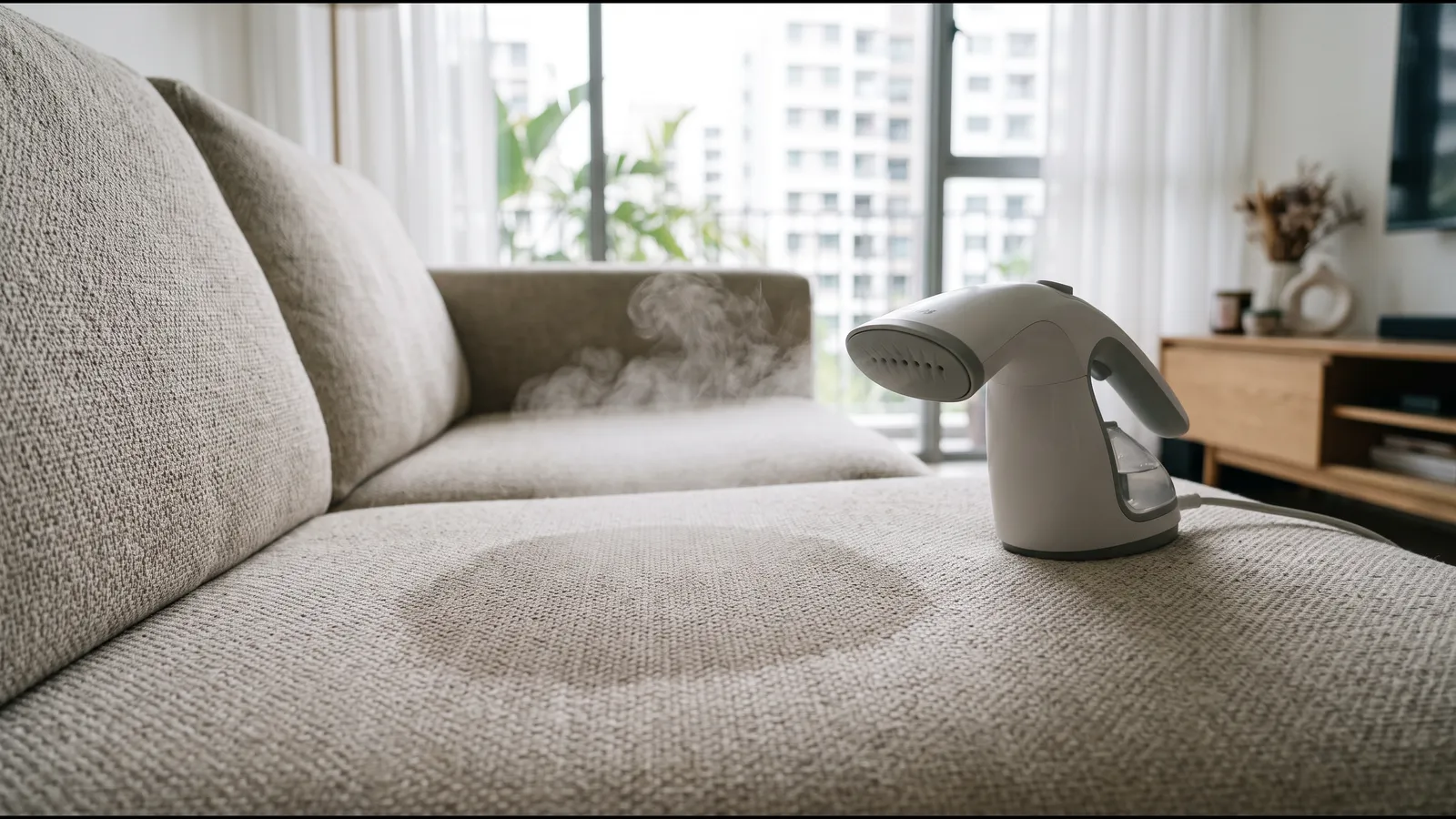
Yes, you can steam clean a sofa yourself, but only if its cleaning tag says W or WS and you keep the steam light. A handheld steamer refreshes the surface, and its heat can kill dust mites it reaches. What it cannot do is pull anything back out. The dirt, body oils and water stay in the fabric. In Singapore's humidity, that leftover moisture in the foam can turn musty. A true deep clean needs hot-steam extraction.
The short answer
- Tag first: steam is water, so only W and WS fabrics should be steamed at home.
- Never steam: S or X codes, leather, velvet or viscose.
- A steamer adds, it does not remove: heat and moisture go in, but dirt, oils and water stay behind.
- Humidity is the risk: damp foam dries slowly here and can turn musty or mouldy, so use light passes and a fan.
- Extraction is the difference: professional hot-steam extraction flushes dirt out and pulls most of the water back out.
What a handheld steamer can and cannot do
Handheld steamers are sold as an easy way to clean a sofa, and they do have real uses. Few product pages mention what stays behind.
What a home steamer does well:
- It freshens the surface and can lift flattened pile.
- It can loosen some light, fresh marks so they are easier to blot away.
- Its heat can kill dust mites that it actually reaches. Many of them sit deeper in the cushions, though, and a quick pass mostly treats the top layer.
What it cannot do: a steamer only puts heat and moisture into the sofa. It has no suction, so nothing comes back out. The dust, sweat and body oils stay in the fabric, now damp, and the water you added has to dry out on its own. Heat can also set some stains, such as blood or milk, and make them harder to shift later.
So a steamer is a refresher, not a deep clean. If your sofa is grubby, start with our guide to cleaning a fabric sofa at home before you reach for steam.
Why leftover moisture matters in Singapore
Singapore is warm and humid all year, so fabric stays slightly damp for longer than it would in a dry climate. Warm, damp fabric and foam are exactly where dust mites, mould and musty smells do well.
Many flats also swing between humid air and dry aircon several times a day. A sofa can feel dry on top while the aircon runs and still be damp in the foam underneath. That hidden moisture is how a freshly steamed sofa ends up smelling worse a week later. If yours already has that stale smell, our guide on getting rid of sofa smells helps you find the cause first.
Check the cleaning tag before any steam goes near it
Steam is water, so the cleaning code on your sofa’s tag decides whether a steamer is safe at all. Look under the seat cushions or along the base, then pick what you find.
What does your sofa’s cleaning tag say?
W: water-based cleaning is OK
Light home steaming is usually fine on a W fabric. Patch test a hidden spot first and let it dry fully before you judge it. Keep the steamer moving in light passes, never soak the fabric, and dry it fast with a fan and good airflow.
S: solvent only, no water
Do not steam an S fabric. Water can leave rings, watermarks or shrinkage. Vacuum it regularly, use a solvent-based upholstery cleaner sparingly for small marks, and leave a full deep clean to a professional.
WS: either method is OK
A light steam is usually fine. Patch test first, keep passes light, and get air moving straight after. Skip the steamer if the fabric is velvet or viscose.
X: vacuum only
No steam, no water and no solvent at home. Vacuum it with a soft brush attachment and leave any real cleaning to a professional who can patch test and choose a method that suits the fabric.
No tag, or it has faded
Treat the sofa as an S code to be safe, which means no steam. Vacuum it, blot any spills with a dry cloth, and send us a photo of the fabric so we can tell you what it will take.
Leather
Never steam leather. Heat and over-wetting can damage the hide. Dust and wipe it with a soft, barely damp cloth and condition it, as set out in our guide on how to clean a leather sofa.
Even with a W or WS tag, do not steam velvet or viscose at home. Velvet pile can crush, and viscose watermarks easily.
How to steam a sofa safely at home
If your tag allows it and the patch test came out clean, these habits keep the risk low:
- Vacuum first. Steam on top of loose dust and crumbs just turns them into a damp paste.
- Read your steamer’s instructions. Some are made for clothes, not upholstery.
- Use light, moving passes. Keep the head moving and do not hold it in one spot. The fabric should feel barely damp, never wet.
- Blot stains first. Keep heat off marks like blood or milk, which steam can set.
- Dry it properly. Point a fan across the sofa, run the aircon or open a window, and stand the cushions up. Stay off it until it is fully dry.
How professional hot-steam extraction is different
The key word is extraction. Our sofa cleaning uses industrial equipment that flushes dirt out of the fabric and then pulls most of the moisture back out, so the soil leaves with the water instead of staying in the foam.
We start with a patch test, then dry soil removal, stain pre-treatment, hot-steam extraction, an eco sanitiser, deodorising and a fast-dry finish. It removes 99.9% of dust mites and bacteria, the solution is non-toxic and safe for babies and pets once dry, and most sofas are dry in 2–4 hours, damp rather than soaked. Our Premium tier adds high-temperature steam where the fabric permits, plus sanitisation and pet-odour treatment.
Stain removal is not guaranteed, since it depends on the stain and its age. For cost, a 3-seater is S$85 on our Standard tier, and the sofa cleaning cost guide lists every size. In Singapore, we suggest a deep clean every 12 months, or every 6 with kids, pets or allergies in the home.
Frequently asked questions
Can I use a steam cleaner on my sofa?
Does steam cleaning a sofa kill dust mites?
How long does a sofa take to dry after steam cleaning?
Why does my sofa smell after steam cleaning?
How much does sofa steam cleaning cost in Singapore?
Want a deep clean that dries fast?
Send us a photo of your sofa on WhatsApp. We reply with a clear, all-in price, usually within the hour during the day.