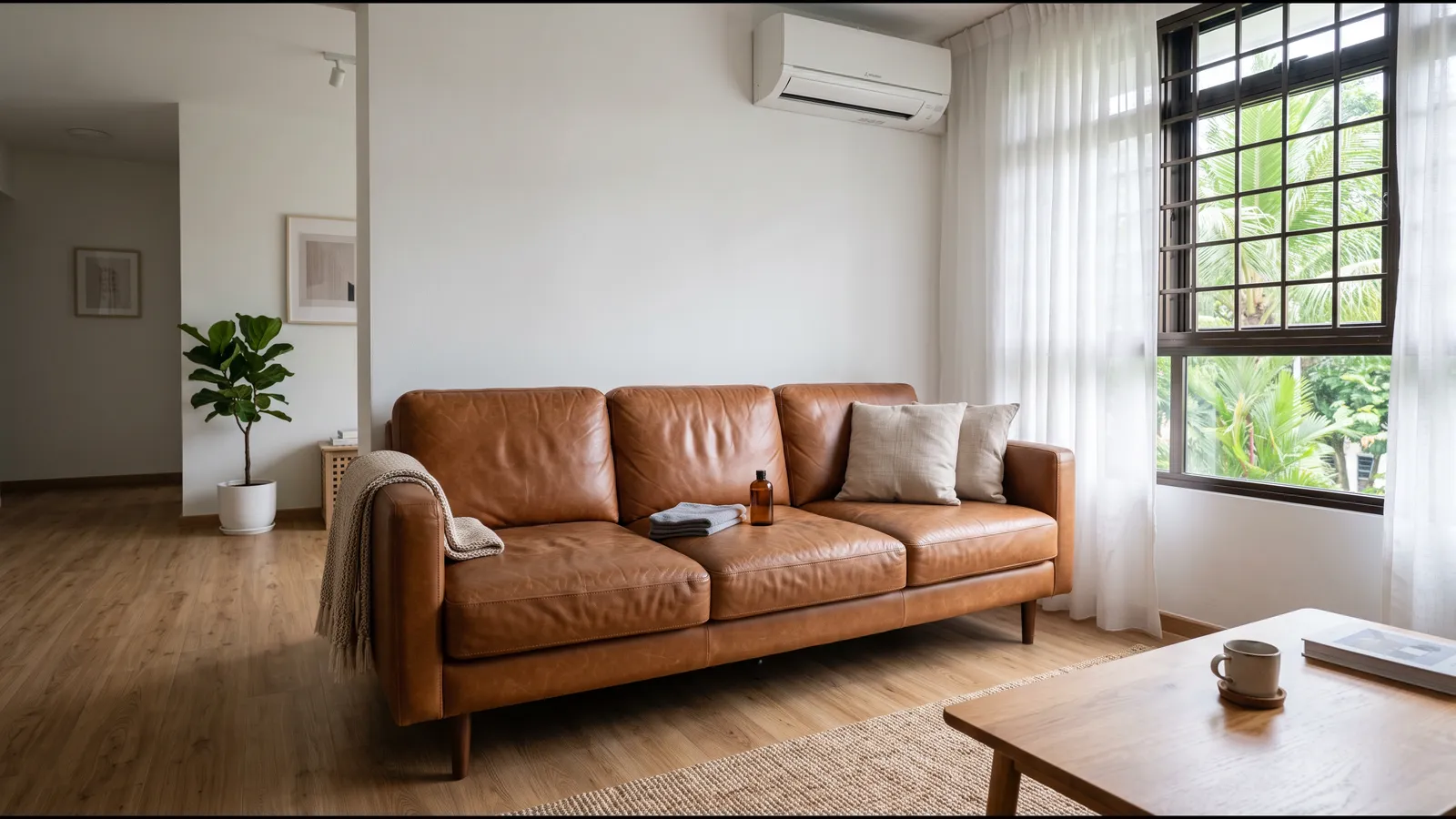
To clean a leather sofa at home, dust it weekly with a soft dry cloth, wipe it with a cloth that is barely damp, blot spills straight away and condition real leather every 6 to 12 months. Before anything else, check what it is actually made of. Real leather and PU (faux) leather need different care, and many sofas in Singapore are PU. Never steam it, soak it or use baby wipes, vinegar or alcohol on it.
The short answer
- Check the material first: real leather, PU and bonded leather each need different care.
- Routine: dust weekly, wipe with a well-wrung damp cloth, and dry it off.
- Conditioning: real leather every 6 to 12 months; PU and bonded leather do not need it.
- Never use: baby wipes, vinegar, alcohol, all-purpose sprays, steamers or a soaking.
- Singapore tip: keep it out of the aircon blast and direct sun, and air the room to stop mould.
First, find out what your sofa is made of
Plenty of sofas in Singapore are PU (faux) or bonded leather, not real hide, and each needs different care. Start here.
What is your sofa covered in?
Aniline or semi-aniline leather
This delicate leather has little or no protective coat, so it soaks up water and body oil fast. Wipe only with a barely damp cloth, use a cleaner made for unprotected leather, and condition every 6–12 months, nearer 6 in an aircon room. Blot spills straight away and never rub.
Pigmented or protected leather
This is the most common type on family sofas. A coloured surface coat protects the hide, so spills wipe off with a well-wrung damp cloth. Use a pH-neutral leather cleaner when it looks dull, and condition every 6–12 months, because the coat can still crack if the leather underneath dries out.
PU or faux leather
PU is a plastic coating on a fabric backing, so leather conditioner does little. Wipe it with a soft cloth and a little mild soap in water, then dry it. Keep alcohol, solvents and direct sun away, as they speed up cracking and peeling. Once PU peels, no cleaning will reverse it.
Bonded leather
Bonded leather is leather scraps glued to a backing under a polyurethane coat. Care for it like PU: dust it dry, wipe with a barely damp cloth, and use mild soap only when needed. It is prone to flaking in heat and humidity, so keep it out of the sun and never scrub it hard.
Not sure? Test it
Check the label or receipt first; it often says genuine, PU, faux or bonded. Then put one drop of water on a hidden spot: if it soaks in and darkens, it is aniline, and if it beads up, it is protected leather or PU. Real leather also has a rich smell and a fibrous, suede-like underside at the edges, while PU and bonded leather show a woven fabric backing.
Routine care for Singapore homes
Dust the sofa weekly with a soft, dry microfibre cloth, and vacuum the seams with a soft brush attachment. Grit in the folds wears the surface. Every week or two, wipe it all over with a cloth dampened in clean water and wrung out until almost dry, then dry it off.
Placement matters here. Our homes swing between humid air and dry aircon several times a day, and leather right under the aircon blast dries out faster. Direct afternoon sun fades and hardens it too.
Real leather also needs conditioning every 6–12 months. Clean it first, work a little conditioner suited to your leather into the surface with a soft cloth, and buff off the excess. Test on a hidden spot first, since some conditioners darken aniline leather.
Spills, body oil and mould
Fresh spills
Blot with a dry, absorbent cloth straight away. Press rather than rub, working from the edge inwards so the spill does not spread. On aniline leather, let the spot dry naturally. A hairdryer can leave a hard, darker patch.
Dark headrests and armrests
These patches come from body oil, sweat and hair products. On protected leather, a regular wipe with a leather cleaner stops the build-up from setting. On aniline leather the oil soaks in, and heavy darkening may not fully lift, even with a professional clean. Catch it early.
Mould spots
Leather in a warm, closed room, such as a flat shut up during a holiday, can grow white or greenish fuzzy spots. Open the windows, wipe the spots off with a dry cloth, clean the area with a leather cleaner and let it dry with air moving. If it keeps coming back, the room needs better airflow. For a lingering musty smell, see our guide to removing sofa smells.
What never to use on leather
- Baby wipes and household wipes. Many contain alcohol or cleaning agents that dry the finish.
- Vinegar and alcohol. Both can strip the surface and dry real leather.
- All-purpose sprays. They are made for hard surfaces, not hides or PU.
- Steamers. Steam and heat can shrink, stiffen and discolour leather.
- Soaking. Too much water can stain leather and seep into the cushions.
Leather wants as little moisture as possible, unlike fabric, which benefits from a deep wet clean with proper extraction (see how to clean a fabric sofa). Still choosing a sofa? Our leather vs fabric comparison covers how each copes with our climate.
When a professional clean is worth it
A professional clean and condition is worth it when headrests have darkened, the leather looks dull even after cleaning, mould keeps returning, or you are handing back a rental. We suggest a professional sofa clean about once a year, or every 6 months with kids, pets or allergies at home.
BRISC cleans leather differently from fabric. Steam and over-wetting can damage hide, so we use a leather-appropriate clean and then condition it. After an end-of-tenancy, leather sofa and mattress clean, a verified Carousell review said: "Superrr competitive prices and everyone is very friendly!!!" Stain removal is never guaranteed, since it depends on the stain and how long it has been there.
Because leather varies so much, we confirm the price from a photo. Send one on WhatsApp and we reply with a clear, all-in price, usually within the hour during the day. Our sofa cleaning cost guide lists fabric rates, and the sofa and upholstery cleaning page explains the full service.
Frequently asked questions
Can I use baby wipes on a leather sofa?
How do I clean a PU leather sofa?
How do you remove mould from a leather sofa?
Can you steam clean a leather sofa?
How much does leather sofa cleaning cost in Singapore?
Leather sofa looking tired?
WhatsApp us a photo of your sofa and we will confirm an all-in price, usually within the hour during the day. We clean and condition leather without steam.