
Upholstery cleaning in Singapore: prices, process and how to choose
Upholstery is everything soft in your home that a vacuum can only skim, the sofa you sink into every evening, the mattress you spend a third of your life on, the fabric chairs, curtains and rugs that quietly soak up Singapore's warm, humid air. This is the complete guide to keeping all of it genuinely clean: what upholstery cleaning actually is, why it matters more here than almost anywhere, exactly how a professional clean works, the difference between Standard and Premium, how often each item needs it, what it costs, and how to tell a real fabric specialist from a clean-everything generalist.
The short answer
- What it is: a deep clean of soft, fabric-covered furnishings, sofas, chairs, mattresses, headboards, curtains and rugs.
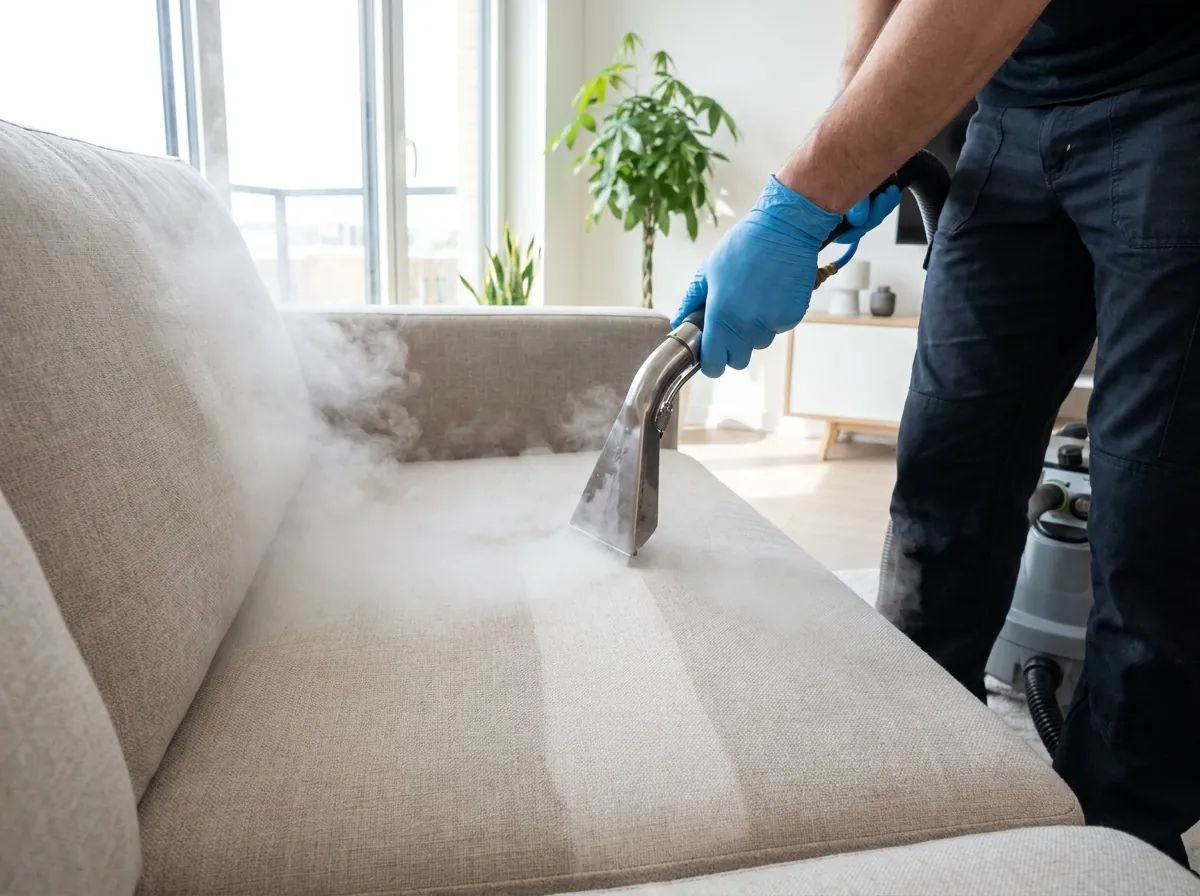
- How it works: an industrial vacuum and stain pre-treatment, then a fabric-safe solution worked into the fabric and extracted straight back out, dry in 2 to 4 hours.
- Why it matters here: Singapore's humidity keeps dust mites, bacteria and odours thriving in soft furnishings year-round.
- Standard or Premium: Premium adds high-temperature steam where the fabric permits, a sanitisation treatment and pet-odour treatment.
- How safe: an eco-friendly, non-toxic, fabric-safe solution, safe around babies and pets, with a patch test first.
- What it costs: from $25 a dining chair to $165 for a 4-seater L-shape, $70 minimum order, mix and match on one visit, final price confirmed on WhatsApp.
Looking to book? See upholstery cleaning and prices, or work out your total and send the list to us on WhatsApp.
What upholstery cleaning is
Upholstery cleaning is the deep cleaning of soft, fabric-covered furnishings, the pieces a household vacuum simply can't reach into. That covers a lot more than most people expect: fabric sofas and armchairs, fabric dining and gaming chairs, mattresses and headboards, curtains, and rugs and carpets. If it's soft, woven or padded and you can't just wipe it down, it's upholstery.
The difference between upholstery cleaning and everyday tidying comes down to depth. Vacuuming and airing out lift what sits on the surface. But fabric is porous, it holds skin flakes, body oils, sweat, food residue, pet dander and the dust mites that feed on all of it, deep in the weave and padding where a vacuum's suction never fully reaches. Upholstery cleaning uses heat, moisture and extraction to draw that embedded soil back out, then remove the water with it, so the fabric is cleaned through rather than just freshened on top.
Why it matters in Singapore
Guidance written for temperate countries assumes a dry season that naturally suppresses dust mites and mould for part of the year. Singapore never gets that reset. Warm temperatures and high humidity, day in and day out, are close to ideal conditions for dust mites, bacteria and the mould that causes musty smells, and soft furnishings are exactly where they settle. Fabric also stays slightly damp for longer here, so trapped moisture, odours and allergens build up faster than they would in a drier climate.
That's the health angle, and it's the reason we describe ourselves as a health-first fabric-care specialist rather than just a cleaning service. Surface cleaning only skims the top; it does nothing about what's living in the padding. For a family, that matters most where people spend the most hours in close contact with fabric, the bed and the sofa, and it matters even more for babies who nap on soft surfaces, young children with eczema or asthma, and pets that share the furniture. A proper deep clean removes the allergens and bacteria rather than pushing them around, which is why every job is built around extraction, pulling the build-up out of the padding, with a process that's safe for the people and animals using the furniture afterwards.
How a professional upholstery clean works, step by step
BRISC's Standard clean has six steps. Each one exists for a reason, and the order matters: skip the prep and the extraction cannot do its job.
- Industrial vacuum. Loose grit, hair, crumbs and dust come out first, so they don't turn to mud once moisture is introduced.
- Stain pre-treatment. Marks, spills and high-use areas like armrests and headrests are treated first, matched to the stain.
- Fabric-safe cleaning solution. A non-toxic solution suited to the fabric is applied to loosen embedded soil, body oil and sweat.
- Agitation. The solution is worked gently into the weave so it reaches the dirt instead of sitting on top.
- Deep extraction. The machine flushes the fabric and immediately pulls the moisture, and the dirt suspended in it, back out of the weave and padding.
- Deodorising. Trapped odours, like the musty note humidity leaves in fabric, are neutralised rather than masked with fragrance.
Most pieces are dry and back in use in 2 to 4 hours. Before any solution touches your furniture, we patch test a hidden area to confirm the fabric and its colour respond well. It takes a minute and it's the difference between a confident clean and an expensive surprise.
Standard or Premium: what "upholstery steam cleaning" really means
Many people search for "upholstery steam cleaning" and expect steam to be part of every clean. At BRISC, the six steps above are our Standard clean. Our Premium clean adds high-temperature steam where the fabric permits, a sanitisation treatment, and pet-odour treatment where it is needed. Premium is quoted on WhatsApp, and it is worth asking about for allergy sufferers, homes with pets, or fabric with a stubborn smell. Not every fabric can take steam, which is one more reason for the patch test.
What can and can't be cleaned this way
Deep extraction is the right method for most upholstery. It works beautifully on the everyday synthetic and natural fabrics that cover the majority of Singapore homes, polyester, cotton and linen blends, microfibre, chenille and the like, across sofas, armchairs, fabric dining and gaming chairs, mattresses, headboards, curtains and rugs. For those materials it's hard to beat: deep, thorough, and gentle enough to repeat safely every year.
There are honest exceptions, and a good specialist tells you about them rather than steaming everything regardless. Genuine leather is not cleaned this way, it's cleaned and conditioned with a different, leather-appropriate method, because steam and over-wetting can damage the hide. And some delicate or specialty fabrics, certain silks, viscose, antique or loose-weave materials, need a gentler approach and a careful patch test first, since they can be prone to shrinkage, watermarking or colour movement. The patch test in step one of the process is exactly how we catch these cases early. If something isn't suited to standard extraction, we'll say so and recommend the safer route rather than risk your furniture.
How often to clean each item
Each soft furnishing has its own natural interval, and Singapore's climate tends to push all of them toward the shorter end. Here's the baseline, deep clean more often if your home has kids, pets or anyone with allergies. For the full room-by-room breakdown and the signs you're overdue, see our guide to how often to clean your sofa, mattress and curtains.
| Item | Deep clean every | Sooner if |
|---|---|---|
| Fabric sofa | 12 months | Kids, pets, allergies, daily heavy use |
| Mattress | 6–12 months | Allergies, night sweats, a new baby |
| Curtains | 12 months | Ground floor, near a road, next to the kitchen |
| Area rug / carpet | 6–12 months | High-traffic areas, shoes worn indoors |
The mattress is the one most people underestimate, it collects dead skin, sweat and dust mites faster than anything else you own, so if you only book one item this year, make it that. If dust mites are your main concern, our parent's guide to dust mites in the mattress goes deeper into why they thrive here and what actually removes them.
What it costs
We keep pricing deliberately simple: no per-square-foot maths, one published price per piece for our Standard clean, and a Premium upgrade quoted on WhatsApp. Upholstery cleaning is a flat $25 for a dining chair up to $165 for a 4-seater L-shape, with a $70 minimum order, and you can mix and match different pieces on the same visit, a sofa and a mattress, two armchairs and the dining chairs, a mattress and the curtains. Booking several items together on one trip is how most households get the best value, since the technician and equipment are already on site.
| Piece | Standard clean |
|---|---|
| Dining chair | $25 |
| Office or gaming chair | $45 |
| Armchair or 1 seat | $55 |
| 2-seater / 2-seater L-shape | $70 / $85 |
| 3-seater / 3-seater L-shape | $85 / $100 |
| 4-seater / 4-seater L-shape | $130 / $165 |
| Mattress (single to king) | $55 to $95 |
How "an item" is counted depends a little on size, a large L-shaped sofa or a king mattress is worth a quick photo, so the final price is always confirmed on WhatsApp before we start, with no surprises on the day. For a fuller breakdown of what drives sofa pricing specifically, see our sofa cleaning cost guide, or view everything on the services and pricing page.
Specialist vs generalist, how to choose
Plenty of companies will clean your upholstery. Far fewer specialise in it, and the difference shows up in the result. A clean-everything generalist, the outfit that also does your floors, windows, aircon and office pantry, usually treats upholstery as an add-on. Fabric gets the same rushed once-over as a hard surface: too much water, not enough extraction, no patch test, and a sofa that's left damp and slow to dry, which in this climate is how you end up with a musty smell a week later.
A fabric specialist works differently, and these are the things worth checking for whoever you hire:
- They patch-test first. A specialist protects your fabric before cleaning it, rather than finding out the hard way.
- They extract the moisture properly. The goal is fabric that's dry in hours, not damp overnight, proper extraction is the whole point of the method.
- They use a baby and pet-safe solution. You sit and sleep on these surfaces, so the products should be safe to be around with no harsh residue.
- They show you real results. Honest before-and-after, an upfront view on what will and won't lift, and advice on the exceptions like leather.
That focus is exactly why BRISC exists, fabric is all we do, and we'd rather tell you a piece needs a gentler method than steam it regardless. If you're weighing up who to book, that single question, "is upholstery your speciality or a side service?", tells you most of what you need to know.
Questions to ask before you book an upholstery cleaner
Tick each one the cleaner answers clearly.
Frequently asked questions
What is upholstery steam cleaning?
How do I book upholstery cleaning in Singapore?
What does upholstery cleaning include?
Is upholstery cleaning safe for babies and pets?
How long does upholstery take to dry?
How much does upholstery cleaning cost in Singapore?
How often should upholstery be cleaned in Singapore?
Can dining chairs and office chairs be cleaned too?
One specialist for every soft surface
Sofa, mattress, chairs, curtains or rugs, send us a photo on WhatsApp and we'll tell you honestly what needs cleaning and what it would cost. No obligation, no upsell.