
Mould on a mattress or sofa: what to do, and how to stop it coming back
Black or greenish spots on the underside of a mattress, a musty smell from the sofa, a fuzzy patch on a cushion that sat against the wall: mould on soft furniture is common in Singapore, and it usually appears without warning after a wet spell. Small surface spots can often be dealt with. Mould that has grown deep into foam usually cannot. This guide explains why it happens, how to clean small patches safely, when to call it and replace, and how to stop it coming back.
The short answer
- Why here: mould grows where fabric stays damp and air does not move, and our humidity keeps fabric damp for longer.
- Act fast: small surface spots caught early can usually be cleaned; old, deep or widespread mould often cannot.
- Clean safely: work in a ventilated room, wear a mask and gloves, and never soak the fabric.
- Know when to stop: mould deep in foam, a large patch, or a smell that returns means replacement is the safer choice.
- Prevent it: airflow under the bed, a dehumidifier or aircon, and never covering damp fabric.
Why mould grows on soft furniture
Mould spores are everywhere, indoors and out. They only grow when they land somewhere that stays damp, and soft furniture gives them that. A mattress absorbs sweat every night. A sofa takes spills and damp clothes. In Singapore's humid air, fabric that gets damp dries slowly, and where the air does not move, such as under a mattress on a solid base, behind a sofa pushed against a wall, or in a room shut while you travel, it may not dry at all.
That is why mould often shows up on the underside of a mattress that sits directly on the floor or on a solid platform, and on the back of a sofa against an outside wall.
Mould can trigger allergies and breathing problems in some people, especially anyone with asthma, so it is worth dealing with promptly. If someone in the home has health concerns, speak to a doctor.
Check how bad it is
Take the item somewhere bright and look at every side, including the underside and the back.
- Small, surface spots: a few dots or a patch smaller than your palm, on the fabric surface, caught recently. These can often be cleaned.
- Large or spreading patches: mould across a big area, or on several sides.
- Deep mould: staining that goes through the cover, a strong musty smell from inside, or mould that came back after cleaning. This has usually reached the foam.
Work out why it happened before you clean, or it will come back: a leak, a mattress on the floor, a sofa against a damp wall, or a room that is shut up.
Cleaning small spots on a mattress
- Protect yourself. Open the windows, wear a mask and gloves, and keep children and pets out of the room.
- Vacuum. Go over the area gently with a vacuum that has a HEPA filter, then empty it outside. Avoid brushing dry mould, which sends spores into the air.
- Treat the spot. Lightly dampen a cloth with a mix of equal parts rubbing alcohol and water, or white vinegar, and dab the area. Patch test first. Do not soak the mattress.
- Dry it completely. Stand the mattress on its side in a bright, airy spot with a fan or the aircon running. Sun helps if you have a safe place for it.
- Check again over the next week. If spots or the smell return, the mould is deeper than the surface.
Stains left behind are covered in our mattress stain guide.
Cleaning small spots on a sofa
Check the cleaning code first (W, S, WS or X) and patch test on a hidden spot. On a W or WS fabric sofa, vacuum gently with a HEPA vacuum, dab with the same alcohol-and-water or vinegar mix on a cloth, then dry it fast with a fan or the aircon. If the cushion covers are removable and the label allows, wash them as directed.
For leather, wipe mould spots with a cloth very lightly dampened with diluted alcohol, dry it, then condition the leather; our guide to cleaning a leather sofa covers this. If a musty smell is the main problem, see removing sofa smells.
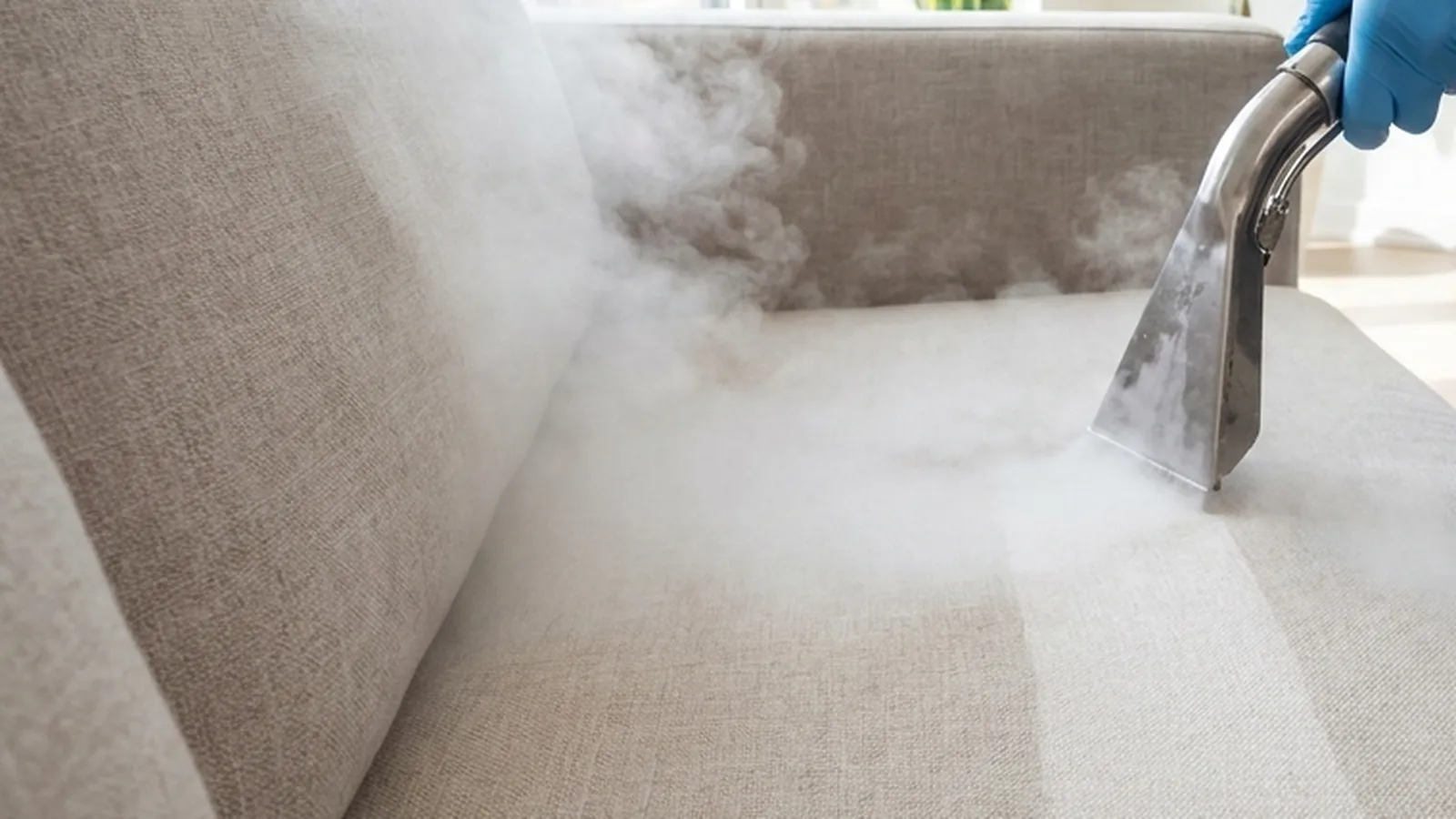
A professional clean can remove surface mould and the smell from the fabric layers. BRISC's Premium clean adds high-temperature steam where the fabric permits and a sanitisation treatment, quoted on WhatsApp. But no cleaning can guarantee mould that has grown deep into foam will not return.
When to replace instead
Be realistic. Replacement is usually the safer choice when:
- the mould covers a large area or several sides;
- it has grown into the foam or the mattress core, or soaked through from a leak;
- the musty smell comes back after cleaning and drying;
- someone in the home has asthma or a mould allergy and the item is in their bedroom.
Cushion foam can often be replaced on its own, even if the sofa frame and cover are fine. Ask an upholsterer.
How to stop it coming back
- Let the mattress breathe. Use a slatted bed base rather than putting the mattress on the floor or a solid platform, and strip the bed to air it now and then.
- Keep the air moving and dry. Run the aircon or a dehumidifier in rooms that stay humid, especially during the wet months, and leave doors open when you are away.
- Leave a gap behind the sofa. A few centimetres from an outside wall lets air circulate.
- Never cover damp fabric. Do not put sheets on a mattress or a throw on a sofa that is still damp after a spill or a clean.
- Use a breathable protector. A protector keeps sweat out of the mattress; choose a breathable one.
- Deep clean regularly. Removing the sweat and skin that build up gives mould less to feed on. See mattress cleaning and sofa cleaning.
Frequently asked questions
Can you remove mould from a mattress?
Why does my mattress get mouldy underneath?
Is it safe to sleep on a mattress with mould?
Does vinegar kill mould on fabric?
Can professional cleaning get rid of mould on a sofa?
Found mould on the sofa or mattress?
Send us a photo on WhatsApp. We'll tell you honestly whether a clean is likely to help or whether replacing it makes more sense.