
There is a whole ecosystem living in the mattress your family sleeps on, and in Singapore's warm, humid air it never really gets a break. The same goes for the sofa, the pillows, the rugs and the soft toys. Dust mites are invisible, harmless to most adults, and a genuine problem for babies, young children and anyone with allergies or eczema. This guide covers what they are, why our climate makes them worse, the signs of a dust mite allergy, and how to get rid of dust mites around the home, room by room.
The short answer
- What they are: microscopic mites that feed on shed skin and live deep in bedding and mattresses.
- Why they matter: it's their droppings and proteins, not the mites themselves, that trigger allergy, asthma and eczema flare-ups.
- Why Singapore is worse: warm and humid all year means no seasonal die-off, ever.
- Most affected: babies and young children, plus anyone with allergic rhinitis, eczema or asthma.
- Around the home: hot-wash bedding weekly, keep bedroom humidity down, vacuum sofas and rugs with a HEPA filter, and deep clean the mattress and sofa every 6 to 12 months.
- What removes them: professional hot-steam extraction reaches into the mattress. BRISC removes 99.9% of dust mites and bacteria, baby-safe, dry in 2 to 4 hours.
What dust mites actually are
Dust mites are microscopic creatures, far too small to see with the naked eye. They don't bite and they don't burrow into skin. Instead, they feed on the tiny flakes of dead skin that every person and pet sheds constantly, and there is no richer source of that than the bed you sleep in. This is why bedding and mattresses are their natural home rather than, say, a hard floor.
The important part for a parent to understand is that the mites themselves are not the problem. It's their droppings and the proteins in their bodies that our immune systems can react to. When those particles are disturbed and breathed in, they can trigger the classic allergy response. So a mattress can look perfectly clean and still be a source of irritation, because everything at work here is invisible.
Why Singapore mattresses are a dust-mite haven
Guidance written for temperate countries usually assumes a cold, dry winter that naturally knocks back dust mites for part of the year. Singapore never gets that reset. Our warm temperatures and high humidity, day in and day out, sit close to the ideal conditions for dust mites to thrive and multiply. There is no seasonal die-off here, so a population that builds up simply keeps going.
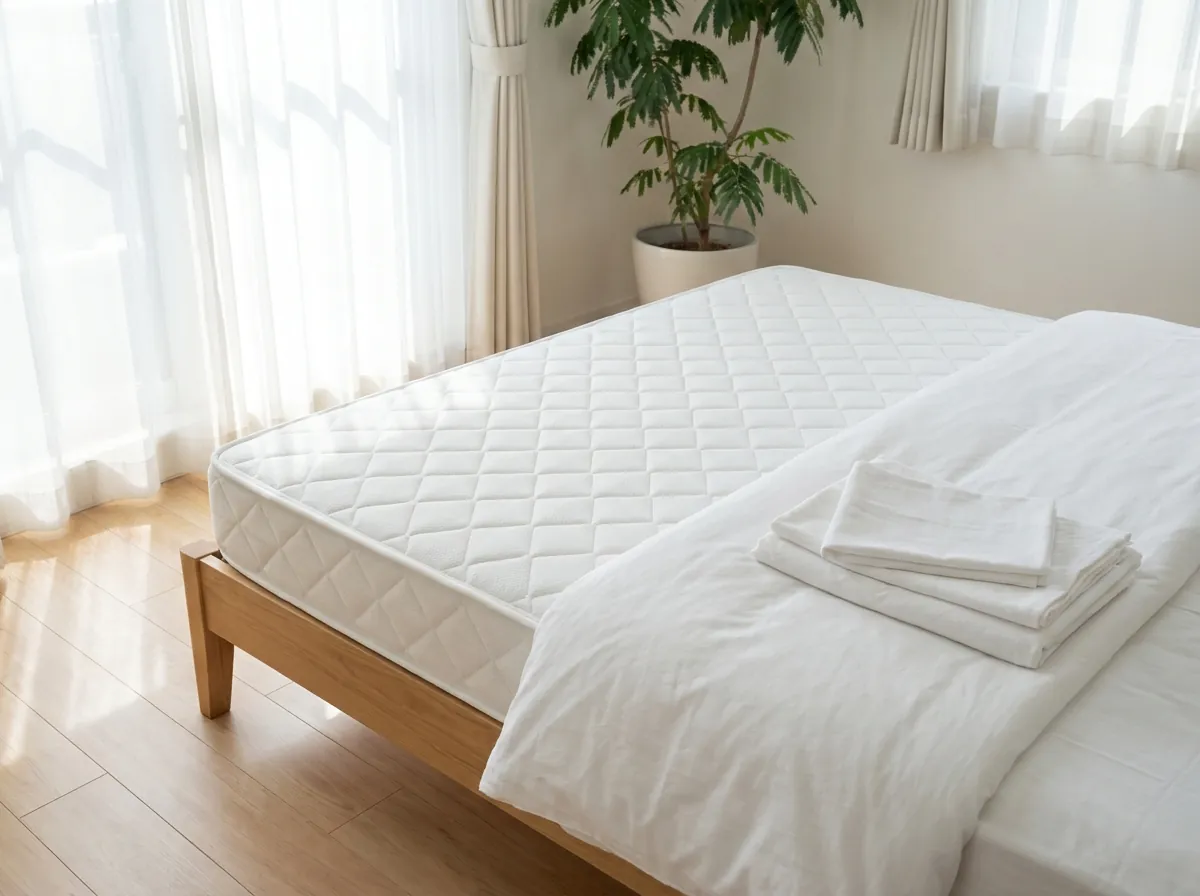
A mattress makes it even easier for them. It holds body warmth long after you get up, it soaks up the moisture from a night's worth of sweat, and it collects the skin flakes that mites feed on, all in one soft, sheltered place. Warm, damp and well-fed is exactly what a mite colony wants, which is why the mattress, more than any other item in the home, is where they concentrate. The same is true of a fabric sofa, the other soft surface a family spends hours on each day.
Who's most affected
For most healthy adults, dust mites are a background presence that causes no obvious trouble. The people who feel it are more specific, and if you're a parent, they're likely under your roof.
Babies and young children are the first group. They spend far more hours in bed than adults do, they sleep pressed right against the surface, and their airways are smaller and more sensitive. Simply put, a child is closer to the mattress, for longer, than anyone else in the house.
The second group is anyone with allergic rhinitis, eczema or asthma. Dust mites are one of the most common and widely recognised indoor allergy triggers, and for someone already prone to these conditions, a mite-heavy mattress can be the thing that keeps symptoms simmering night after night. None of this is cause for panic, it's very normal and very manageable, but it does explain why the same bedroom can be fine for one family member and quietly miserable for another.
7 warning signs to watch for
Because the mites are invisible, you diagnose the problem by its knock-on effects. If two or more of these sound familiar, the mattress is worth a closer look.
- Someone in the home wakes up congested or sneezing, then eases through the morning.
- Itchy or watery eyes first thing after waking, before anything else in the day.
- Eczema that flares in bed, or skin that's more irritated on waking than at night.
- A faint musty or "old fabric" smell when you lean close to the mattress.
- Visible dark patches or shadowing on the mattress surface, often sweat and body-soil outlines.
- An old mattress that has never been professionally cleaned, however tidy the sheets are.
- Symptoms that clearly ease when you're away from home, on holiday or at a relative's place, then return.
Dust mite allergy: the signs, and how it's confirmed
A dust mite allergy is the immune system overreacting to proteins in mite droppings and bodies. It usually looks like a cold that never quite leaves: sneezing, a runny or blocked nose, itchy or watery eyes and an itchy throat, often worst first thing in the morning after a night with your face against the pillow. In people with asthma it can bring on coughing, wheezing or a tight chest, and in children with eczema it can keep the skin flaring.
The only way to know for sure is to see a doctor. A GP or allergist can confirm it with a skin-prick test or a blood test and advise on treatment. Whatever they suggest, cutting down the number of mites you live with is the usual first step, and that part happens at home. This guide is general information, not medical advice.
What removes them, and what doesn't
This is where a lot of effort gets spent in the wrong place, so it helps to separate what actually works from what only feels productive.
| Common belief | The reality |
|---|---|
| Washing the sheets on hot handles it | Great for the bedding, but it does nothing for the mattress core where most mites live. |
| Vacuuming the mattress clears it out | Lifts some surface dust only. A household vacuum can't reach the mites and droppings held inside. |
| Running the aircon dries things out | Reducing humidity genuinely helps slow mites down, but it won't remove what's already there. |
| Sunning the mattress kills them | Limited help, and hard to do properly from an HDB flat with no garden or long sun exposure. |
| A deep professional clean | The reliable answer. Hot-steam extraction reaches into the mattress and pulls the build-up out. |
Washing sheets on a hot cycle and keeping bedroom humidity down are both worth doing, and they help with the bedding and the wider room. But they leave the mattress itself largely untouched, and that's where the colony lives. For the monthly routine that keeps the surface fresh between deep cleans, see how to clean a mattress at home.
The dependable answer is professional hot-steam extraction. It reaches down into the mattress rather than skimming the top, lifting mites, droppings and the dead skin they feed on, then pulling the moisture back out so the mattress dries quickly instead of staying damp. That last part matters a lot in our climate, because a wet mattress is a mould risk. Our mattress cleaning is built exactly around this: it removes 99.9% of dust mites and bacteria using a non-toxic, baby-safe process, and the mattress is dry and ready to sleep on again in 2 to 4 hours. Mattresses are priced by size, from $55 for a single up to $95 for a king, with a $70 minimum order per visit. You can see the full range on our services and pricing page or ask us first on contact.
How to get rid of dust mites around the home, room by room
You can't make a Singapore home mite-free. Dust mites need humid air to survive, and our relative humidity averages above 80%. What you can do is keep their numbers, and the allergen they leave behind, low enough that nobody in the house notices. These are the habits that make the biggest difference.
Whole-home dust mite checklist
Tick what you already do. Whatever is left unticked is your next step.
The bedroom
Start here, because it's where everyone spends a third of the day. Weekly hot washing takes care of the bedding. Allergy organisations suggest keeping indoor humidity below 50%. That's hard to reach in Singapore, but aircon at night and a dehumidifier during the day both bring the bedroom closer. Mite-proof covers stop new mites settling into the mattress and pillows, and they seal in what's already there.
The living room
A fabric sofa is the biggest mite reservoir after the bed. Take the cushions off when you vacuum and get into the seams. Rugs hold mites too, and a rug on a tiled floor is far easier to keep down than wall-to-wall carpet. For the build-up a vacuum can't reach, see sofa and upholstery cleaning and carpet and rug cleaning.
Curtains and soft toys
Curtains collect household dust for months at a time, so they're worth a clean every 6 to 12 months. Ours are steam-cleaned on site, without taking them down. A child's favourite soft toy is a small mattress in its own right: wash it hot, or bag it and freeze it for 24 hours, then wash it to rinse the allergen out.
How often to clean your mattress
For a typical adult with no particular sensitivities, a professional mattress clean every 6 to 12 months keeps things in good shape. Move to around every six months if there's a baby or young child in the home, or if anyone sleeping there has allergies or eczema, because those are the people who feel a mite build-up most and the ones who spend the most hours in contact with the surface.
If you'd like to plan the rest of the home around the same schedule, our companion guide on how often to clean your sofa, mattress and curtains in Singapore lays out a simple room-by-room timetable. The mattress just happens to be the one item on that list worth prioritising first.
Frequently asked questions
How do I get rid of dust mites at home?
What are the symptoms of a dust mite allergy?
Can you get rid of dust mites completely?
Does aircon kill dust mites?
Can dust mites live in my mattress even if I can't see them?
Does cleaning a mattress help with allergies or eczema?
How often should I clean my mattress if I have a baby?
Can't I just vacuum or sun the mattress myself?
Worried about what's in your mattress?
Send us a message on WhatsApp and we'll talk you through it honestly, whether it needs a clean, what's involved, and what it would cost. No obligation, no upsell, and a baby-safe process from start to finish.