
Post-renovation cleaning in Singapore: the full handover checklist and what it costs
The last contractor has packed up, the keys are yours, and the new place looks finished. Then the light hits a countertop and you see it: a fine grey film over everything. Renovation dust is unlike any household dust. It's finer, it travels further, and it keeps settling for days after the work is done. This is the full room-by-room guide to getting a freshly renovated Singapore home genuinely clean before you move in, when to book it, and why the soft furnishings deserve as much attention as the surfaces.
The short answer
- Book it after all works are done and before you move furniture and soft furnishings in.
- Reno dust is different: fine cement, wood and drywall dust that travels everywhere and settles for days.
- It can't be wiped once: it needs repeated passes, HEPA vacuuming and attention to every surface, ledge, track and cabinet.
- Don't skip the fabrics: new or existing sofas, mattresses and curtains trap fine dust deep down — BRISC's specialism.
- Cost: a larger, custom-scoped job — BRISC quotes after a quick survey rather than a flat rate.
What post-renovation cleaning is, and why it's different
A normal clean deals with everyday grime: crumbs, dust bunnies, the odd stain. Post-renovation cleaning deals with something else entirely. Cutting tiles, sanding wood, drilling walls and installing drywall throws off a super-fine powder of cement, gypsum and wood dust. It's so light that it stays airborne for hours, drifts through the whole home, and then keeps settling for days after the trades have gone. Wipe a shelf clean in the morning and there's a fresh film on it by evening.
That's why you can't just wipe a renovated home down once and call it done. The dust hides in places a routine clean never touches: the tops of door frames and skirting, inside every cabinet and drawer, along window and sliding-door tracks, in aircon trunking and vents, behind grilles, and in the grout lines of new tiling. Get it wrong and the dust simply redistributes, so the home looks clean for an hour and then greys over again.
Doing it properly means repeated passes rather than one sweep, HEPA vacuuming to capture the fine particles instead of flinging them back into the air, and a methodical top-to-bottom order so dust from high surfaces falls onto areas you haven't cleaned yet. Every surface gets attention — not just the ones you can see at eye level. It's slower, more thorough work than a standard clean, and that's the whole point.
When to book post-renovation cleaning
Timing is the one thing people most often get wrong, and it makes a real difference. Two rules:
1. After every contractor and trade is finished. Not after the tiler but before the carpenter, not while the painter is still touching up. Each trade generates its own dust, so cleaning mid-project just means paying to do it twice. Wait until the very last person has packed up and the space is empty.
2. Before you move furniture and soft furnishings in. This is the part that catches families out. If your new sofa, mattress and curtains are already in place when the deep clean happens, the fine reno dust that's still settling will work its way straight into the fabric — and once it's deep in a mattress or a sofa cushion, a surface wipe won't get it out. Clean the empty shell first, move in second.
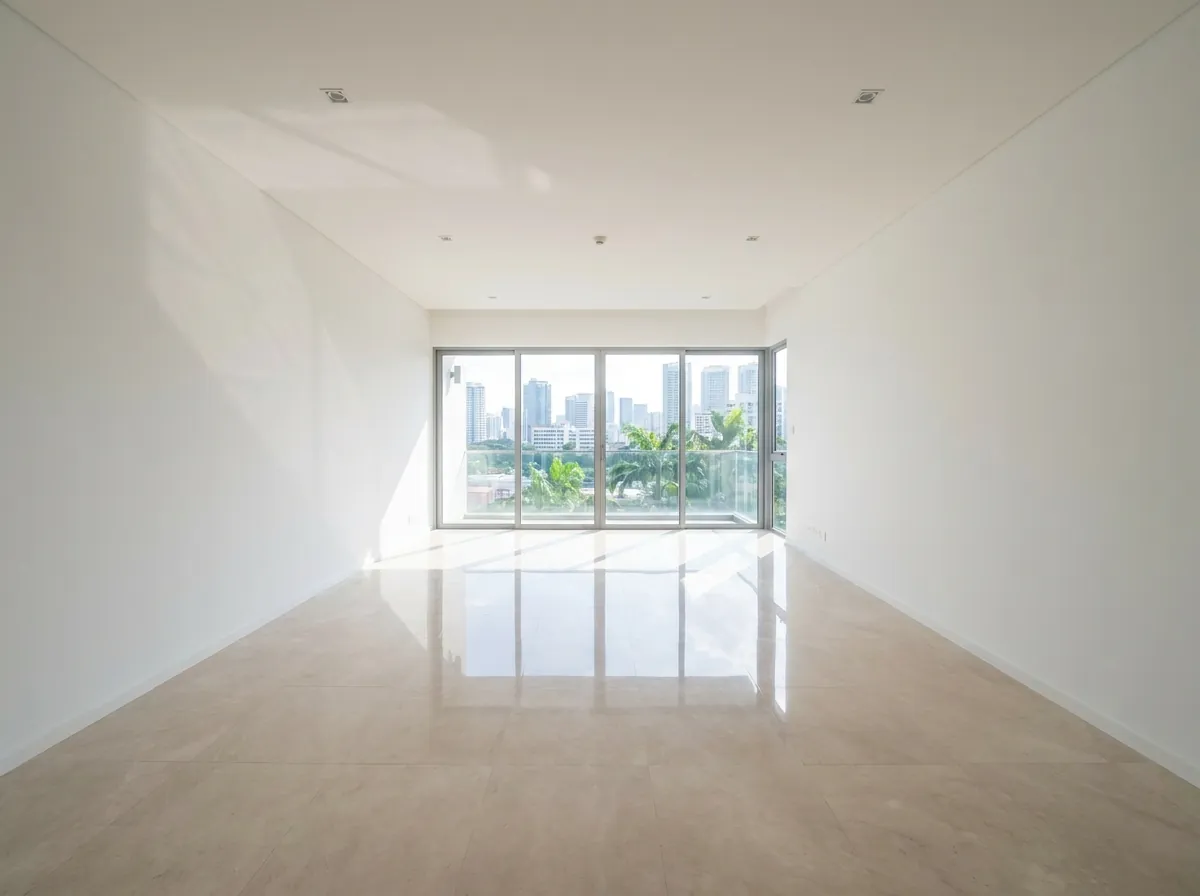
For a new BTO or condo handover, the sequence is usually: collect keys and inspect, complete any renovation or built-in carpentry, then book the post-reno clean in the window after the last trade leaves and before your delivery dates for furniture and appliances. If your renovation runs in phases, aim the clean at the end of the final phase. It's worth coordinating your furniture delivery a day or two after the clean rather than before it.
The room-by-room handover checklist
Use this as your walk-through list, whether you're doing it yourself or checking a professional's work. The golden rule is top to bottom: ceilings and high fittings first, floors last, so falling dust never lands on a surface you've already finished.
| Area | What to clean |
|---|---|
| General (all rooms) | Ceilings and corners, walls, skirting boards, light fittings and switches, doors and frames, windows, window tracks and grilles |
| Kitchen | Cabinets inside and out, countertops, sink and tap, backsplash, appliance exteriors and the gaps around them |
| Bathrooms | Wall and floor tiles, grout lines, sanitary ware, mirrors and glass, drains and floor traps |
| Bedrooms & living | Built-in wardrobes and shelving inside and out, ledges, floors and skirting |
| Floors | Sweep, HEPA vacuum, then mop — with a deep clean to lift cement haze off tiles and stone |
A few surfaces are worth calling out because they're the ones most often missed. Window and sliding-door tracks collect a gritty paste of dust and moisture that needs digging out, not wiping over. Inside cabinets and drawers matter because that's where you'll store crockery, clothes and food — reno dust in a kitchen drawer isn't something you want. Aircon trunking, vents and grilles hold fine dust that gets blown back into the room the moment you switch the unit on. And new tiling almost always leaves a faint cement or grout haze that only shows up once the floor dries, which is why floors get a proper deep clean rather than a quick mop.
Don't forget the soft furnishings
Here's the part almost every checklist skips, and it's the one BRISC cares about most. Fine renovation dust doesn't just land on hard surfaces — it sinks into anything soft. Sofas, mattresses, curtains, rugs and cushions all act like a sponge for that ultra-fine powder, and because it settles deep, the fabric can look perfectly clean on top while holding dust well below the surface.
This applies to brand-new furnishings as much as existing ones. A new sofa delivered into a home that's still shedding reno dust picks it up immediately; an existing mattress that sat through the works has been collecting it for weeks. Either way, the first time someone sits down heavily or lies on the bed, that trapped dust gets pushed up into the air they breathe.
A proper fabric deep clean before the family starts using the furniture clears it out for good. This is exactly what we specialise in: our sofa cleaning, mattress cleaning and curtain steam cleaning use hot-steam extraction that flushes fine dust out of the fabric and removes 99.9% of dust mites and bacteria, with everything dry and ready to use again in 2 to 4 hours. If you want the wider picture on fabric care in Singapore's climate, our guide to upholstery cleaning is a good place to start. Folding the soft furnishings into your post-reno clean means the whole home is genuinely fresh, not just the surfaces you can see.
New-furniture smell and off-gassing
That distinctive "new renovation" smell isn't just dust. Fresh paint, adhesives, sealants, engineered wood and brand-new furniture can all release odours as they cure and settle in — often described as off-gassing, with formaldehyde among the compounds involved. It's a normal part of a newly finished space, and it tends to be strongest in the first weeks.
The simplest thing you can do is air the home out well: open windows, run fans, and keep cabinets and wardrobes open so trapped air can move through them. Giving the space time to breathe before you fully move in helps too. Where it's offered, a formaldehyde treatment can help address that new-build smell more directly — BRISC offers formaldehyde treatment alongside floor deep cleaning as part of our post-reno work, so it can be scoped in with the rest of the job. We'd rather keep this honest and general than throw numbers around: every home, every set of materials and every renovation is different, so the right approach is one we'll talk through with you rather than promise on a blog page. For what NEA advises on ventilation, testing and air purifiers, read our formaldehyde removal guide.
Post-reno vs move-out cleaning
These two jobs overlap a lot, which is why people often search for one and mean the other. Both are deep cleans that go well beyond a routine tidy, both work through the home room by room, and both pay attention to the same easily-missed spots — tracks, cabinet interiors, tiles and grilles.
The difference is the goal. Post-renovation cleaning is about clearing construction dust and debris out of a freshly finished home so it's ready to live in. Move-out cleaning is about returning a rented home to handover condition so you get your deposit back and leave it as you found it — the focus shifts to marks, wear and the standard a landlord or agent will inspect against. If you're an owner moving into a renovated place you'll want post-reno; if you're a tenant handing keys back, you'll want move-out. Either way the deep-clean skillset is the same, and we handle both. Handing keys back? Work through our end of tenancy cleaning checklist.
What it costs and how to book
Post-renovation cleaning is a bigger, more involved job than a standard clean, so it's genuinely hard to put a single price on it without seeing the home. The cost depends on the floor area, how many rooms and bathrooms there are, the condition the works have left behind, whether floors need cement-haze treatment, whether you're adding formaldehyde treatment, and how much soft-furnishing care is involved. Because those vary so much from home to home, we don't quote a flat rate that would either overcharge a small flat or fall short on a large one.
Instead, BRISC gives you a custom quote after a quick survey — often just a few photos or a short video of the space on WhatsApp, or a site visit for larger jobs. You'll know the scope and the cost before anyone starts, with no surprises on the day. The easiest way to get moving is to message us on WhatsApp with your unit type and roughly when your renovation wraps up; you can also read more on our post-renovation cleaning page or get in touch through our services or the contact page.
Frequently asked questions
When should I book post-renovation cleaning?
How is post-renovation cleaning different from normal cleaning?
Do I need to deep clean new sofas and mattresses after a renovation?
How much does post-renovation cleaning cost in Singapore?
Just finished a renovation?
Send us a few photos of the space on WhatsApp and we'll scope a proper post-renovation clean, dust, floors, fabrics and all, then quote it honestly. Move in to a home that's genuinely fresh, not just tidied.